
Photos by Gabriela Henriquez Stoikow
The program aims to provide a payment plan for people who cannot pay the new tax in a single payment due in December this year. It does not exempt seniors or people undergoing financial hardship from the payment.
By Gabriela Henriquez Stoikow
The Mableton City Council approved on Tuesday evening a structured financial relief program for seniors and people experiencing documented financial hardship to request penalty relief from late payments made for the Public Safety Special Service District.
The tax collected provides dedicated funding for police and public safety services within city limits, with a 4.5 mill rate, or $4.50 per $1,000 of a property’s assessed value, according to the city. The due date to pay the tax is on December 4, 2026.
Under the approved plan, the city would put residents in a payment plan and extend the payments they make through April 5, 2027. Residents would need to put down a down payment of 10% and then commit through an affidavit to make four payments of the remaining balance through April.
Under the plan, residents who enroll get charged an interest rate of 10%. The application starts on Monday, November 16th, and the deadline to enroll is December 4, 2026.
Though the plan is accessible to Mableton’s property owners, priority will be given to senior homeowners aged 65 and older facing financial hardships, and to people with fixed incomes who rely primarily on benefits such as Social Security, Supplemental Security Income, Social Security Disability Insurance, pensions, or veterans’ benefits. The financial hardship must have occurred within the past six months.
Approved applicants who do not pay the full balance of the tax owed by the April deadline, are subject to penalties, executions, and other enforcement and collection actions.
Mableton Finance Director Karen Ellis and her staff will be responsible for signing up people in-person to the program and reviewing the affidavits documenting financial hardship from residents.
City Attorney Emilia Walker-Ashby explained that those who join the program will still be tax delinquent. “That’s because, consistent with local government law, if your taxes are not paid by the due date, they are delinquent,” she said. “This is a commitment from the city that as long as you are paying in accordance with that schedule, the city will not act. It will not make a tax execution on your property, and the city also will not assess penalties while you are paying in compliance with the payment schedule.”
At Monday evening’s meeting, City Manager William “Bill” Tanks, said they don’t know how many people will apply to the program.
The plan does not need county or state approval, Walker-Ashby told the Cobb County Courier.
“We’ve heard our residents and our citizens say that they needed some form of relief,” said Mayor Michael Owens. “We cannot extend the due date. The due date is what it is, but what we can do is allow some flexibility in when the payment is actually made, and the ability that this program will provide to be able to waive the fees and penalties associated with that.”
Residents can expect this bill to fund public safety every year, Mayor Owens confirmed during Tuesday evening’s meeting. But the continuation of the hardship relief in later years remains undecided.
Owens said the City of Mableton will seek approval from the state legislature to get approval for an exemption for seniors, which is a measure the city cannot approve by itself.
“We have done what we could with this, and it is not a silver bullet,” Owens said. “It does not reduce your tax amount. Your tax is what it is. Again, we’ve done within the bounds of what we could do here.”
How to qualify?
There are certain conditions to be met to be eligible for the program.
- A reduction of at least forty (40%) of the applicant’s household income resulting from significant medical expenses, disability, serious illness, or an unexpected medical emergency affecting the applicant’s household.
- Death of a household member who contributed materially to the applicant’s household income.
- The applicant’s divorce or legal separation from a household member who contributed materially to the applicant’s household income.
- Extraordinary financial circumstances.
“This fourth category is basically a catch-all because we know that people are unique and they have unique circumstances, and there may be a financial hardship that we didn’t enumerate that would justify getting relief under the program,” the city attorney explained.
How to apply?
To apply, homeowners would come to the city offices, fill out the hardship application form provided in-person, and sign an affidavit establishing that they qualify under one of the enumerated financial hardship exceptions.
Finance Director Karen Ellis said that applicants will walk away with a piece of paper that says, “Here’s the 10% you’ve paid today, and here are your equal installments for the next four months.”
Opposition to the tax and the plan
The approved plan came with fierce opposition from residents who voiced their discontent with the Public Safety Special Service District tax and with the program.
Mableton resident Peter Richie spoke on Monday evening in opposition to the plan, arguing that the bill remains equal on paper and the program is just selectively waiving the penalties. He said this is the first step towards a tax exemption. “Every dollar that’s exempted in the future, the rest of us will have to make up,” he said.
Nick Dimondi expressed his opposition to the public safety service district tax and said that it amounted to double taxation. “I’m calling on all citizens of Mableton to strike against this illegal public safety service district tax,” he said. “Delay your payments as long as you can.”
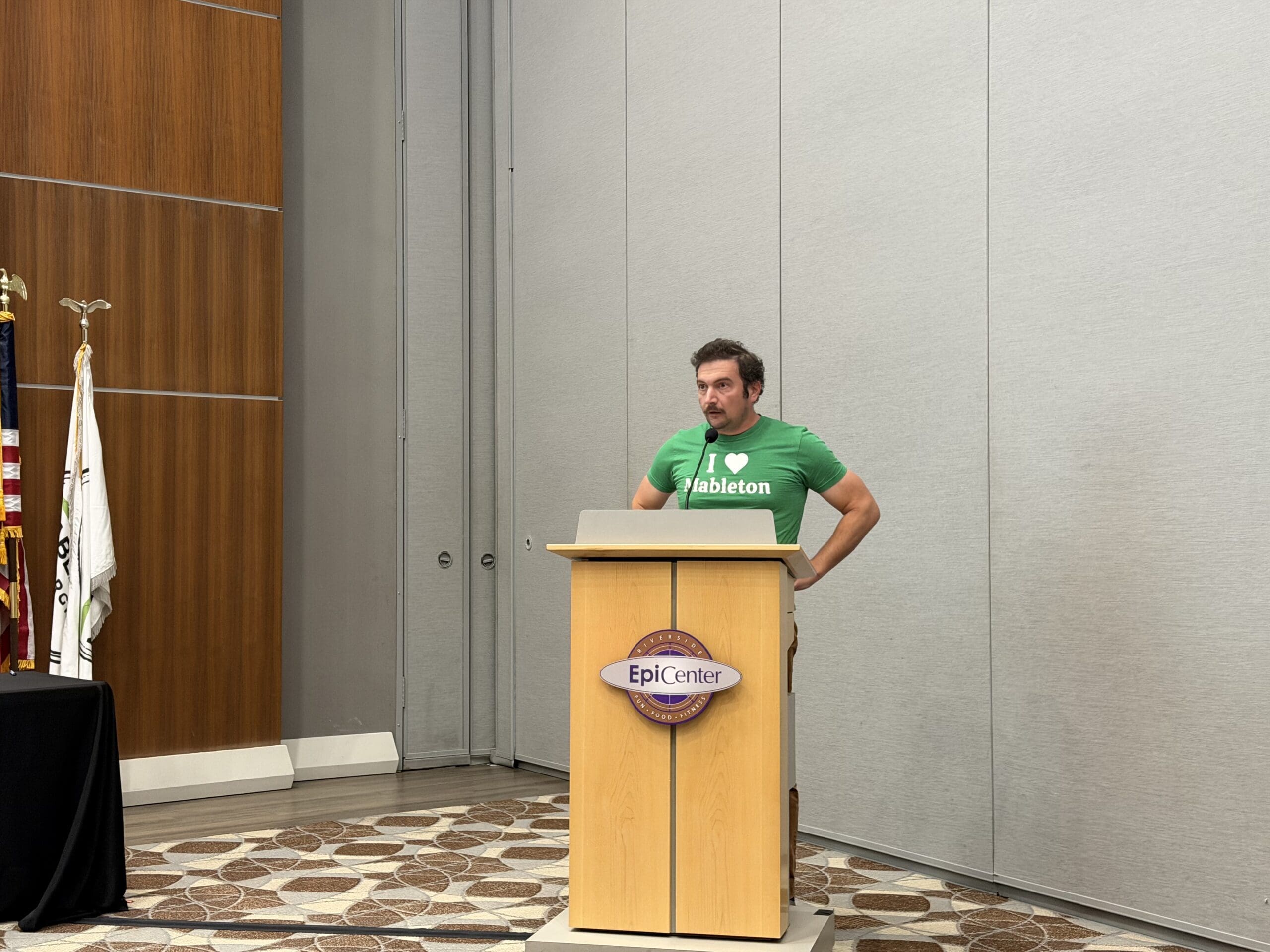
Deshanndra Jones, a district 5 resident, said she supports Mableton’s public safety. “However, supporting the public safety does not mean the residents should be expected to accept an unlimited tax increase without transparency.”
She said many Mableton residents first bought their homes in the city and did not expect this additional tax. As such, she asked city officials to provide a long-term financial plan outlining how much this tax will cost for a homeowner in the next five and ten years.
“My mother is on Social Security and has a disability,” she said. “Without me, this will crush her. I want you guys to know that it will crush her, so just take into account your residents; we’re good people.”
What happens if you don’t pay the bill?
City attorney Walker-Ashby said there are three things that happen when someone doesn’t pay their taxes.
First, they accumulate interest after the due date. Second, they accumulate penalties after the due date. The third is a tax execution.
“For example, a state tax lien is a legal execution,” she explained. “What happens is the government provides specific notices; they file the tax execution with the superior court where you live, which in this case, would be Cobb County, and then that goes against the property, and then that tax execution can then be used for collection purposes.”
What the council is doing through this program, she said, is that they are utilizing the two tools that are available to them, which are the waiver of penalties and the cessation of tax executions, to give people who are suffering from a financial hardship relief.

Gabriela Henriquez Stoikow is a bilingual journalist based in Atlanta, Georgia, covering local news, immigration, and healthcare. She has previously worked at The Miami Herald, CNN, and Miami Today News, and her work has been featured in the Atlanta Business Chronicle, WABE, Rough Draft, and Documented NY. She won the Atlanta Press Club’s Rising Star Award in 2025 and was a finalist for the Reporting on Civil and Human Rights category of the Awards of Excellence in 2026.