by Maya Homan and Alander Rocha, Georgia Recorder, [This article first appeared in the Georgia Recorder, republished with permission]
January 12, 2026
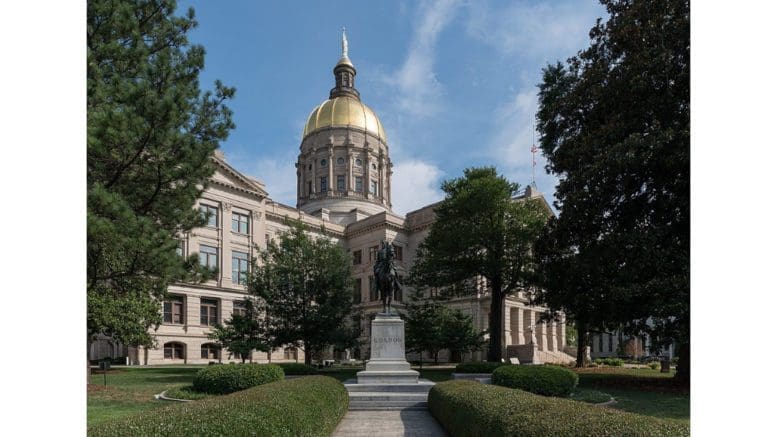
The hallowed halls of Georgia’s state Capitol were abuzz Monday as lawmakers, lobbyists and everyday citizens flocked to the Gold Dome for the start of the 2026 legislative session.
For lawmakers in the state House and Senate, that means a 40-day countdown to introduce, deliberate and finalize laws for the upcoming year has officially begun. The calendar for this upcoming session, which also includes days off for holidays and committee meetings, will run from mid-January until early April. The 2026 session is also the second in a two-year cycle, meaning bills that didn’t make it across the finish line in 2025 could get a second chance this time around.
On the first day of the session, both chambers signed off on this year’s legislative schedule, but not without some debate. The House passed the schedule with a 150-to-27 vote after some lawmakers objected to the Legislature being in session on Eid al-Fitr, a major religious holiday in the Islamic faith that marks the end of Ramadan. There are at least four Muslim lawmakers currently serving in Georgia.
In the Senate, the resolution passed unanimously, but not without criticism from Sen. Nabilah Parkes, a Duluth Democrat who is Muslim.
“I am voting yes today for the good of the order, but moving forward, we should have an inclusive calendar,” she told the chamber.
Under the calendar adopted Monday, a key deadline for bills to clear at least one chamber is set for Friday, March 6, and the last day of the session will be Thursday, April 2.
New leadership in the Senate
The Senate kicked off the start of the 2026 legislative session by electing Sen. Larry Walker III, a Perry Republican to be the new president pro tem. Walker, who has served in the Legislature since 2015, is the son of former House majority leader Larry Walker Jr., who retired from the Legislature in 2005.
“My father taught me that while we sit on different sides of the aisle, or come from different areas of the state, or different perspectives, we are all bound by a common duty to leave Georgia better than we found it,” Walker said in a speech following his election.
The position of president pro tem, which is the second-highest in the chamber, was previously held by state Sen. John Kennedy, a Macon Republican who resigned from his seat in December to focus on his bid for lieutenant governor. A special election to fill Kennedy’s seat will be held on Jan. 20.
In the House, three new lawmakers made their debut: Two Democrats, Rep. Akbar Ali of Gwinnett County and Rep. Eric Gisler of Watkinsville, and one Republican, Rep. Bill Fincher of Canton. All three were elected through recent special elections.
The chamber also held a moment of silence for Fincher’s predecessor, Mandi Ballinger, who died last year after a long battle with cancer.
Two House seats are currently left vacant after Reps. Karen Bennett and Lynn Heffner announced their resignations last week. Bennett, a Stone Mountain Democrat, was indicted for unemployment fraud shortly after she stepped down, while Heffner, an Augusta Democrat cited damage to her home from Hurricane Helene as the reason she could no longer fulfill a state law requiring representatives to live in the districts they represent. Another House Democrat who was charged with unemployment fraud, Rep. Sharon Henderson of Covington, was present for the first day of the session Monday.
On the Senate side, two lawmakers — Democrat Jaha Howard of Smyrna and Republican Jason Dickerson of Canton — also made their first appearance as state senators.
In an interview with the Georgia Recorder, Dickerson described the experience of being a newly elected lawmaker as “surreal.”
“When you see your name up on the board for the first time, that’s when it really hits home,” he said.
But the new elected officials are not the only big change under the Gold Dome: Lawmakers returned Monday to a newly renovated state Capitol that has been restored to its original 19th century appearance, with some 21st century amenities – like a USB-C port – added to the desks.
“You probably noticed, this people’s house is looking a little bit brighter today in every essence of that word,” House Speaker Jon Burns said.
Advocates raise their voices
Lawmakers weren’t the only ones gearing up for the beginning of the session. Several advocacy groups held press conferences to encourage civic engagement and draw lawmakers’ attention to policy issues.
The ACLU of Georgia held a “Pack the Capitol” event alongside organizations like Indivisible Georgia Coalition and ProGeorgia to kick off the beginning of the 2026 session.
“Every law passed under this gold dome impacts 11.2 million Georgians,” said ACLU of Georgia policy and advocacy director Christopher Bruce. “That’s why the legislators need to listen more to the people than the politics. They need to listen more to the Georgians than the lobbyists.”
The Poor People’s Campaign and Georgia Interfaith Public Policy Center also held a press conference to advocate for the state’s Supplemental Nutrition Assistance Program to be fully funded. In the fall, Georgia’s SNAP administrators signaled they would need more than $60 million in additional state dollars to maintain their staffing levels amid federal cuts to the program. More than one in 10 Georgians use SNAP to buy groceries.
Wesley E. Myrick, executive director of the Georgia Interfaith Public Policy Center, said that fully funding SNAP not only helps ensure that every Georgian has access to food, but also sustains the businesses in local communities.
“Making sure that seniors, disabled persons, students and families with children have access to fresh fruits, vegetables and proteins is a critical issue for our state,” Myrick said in an interview.
Republican lawmakers in both chambers are floating additional tax cuts this session amid growing concerns about affordability, with the House proposing cutting property taxes and the Senate vying to eliminate Georgia’s state income tax by 2032. Myrick argued that those tax cuts would only benefit a segment of the population, while fully funding SNAP would help the state overall.
“Not every Georgian is a homeowner, so they’re not going to benefit from tax credits,” he said. “But every single Georgian can benefit from the economic impact of SNAP on local businesses that employ people in every corner of our state.”
Georgia Recorder deputy editor Ross Williams contributed to this report.
Georgia Recorder is part of States Newsroom, a nonprofit news network supported by grants and a coalition of donors as a 501c(3) public charity. Georgia Recorder maintains editorial independence. Contact Editor Jill Nolin for questions: info@georgiarecorder.com.