
Photo courtesy of Oscar Guevara
By Sofia Cupertino
Oscar Guevara was on a flight to Los Angeles, California, when his father, Mario Guevara, was detained while livestreaming his journalism work. Mario always warned Oscar to be prepared for him to potentially be arrested due to his diligent coverage of ICE around Georgia, but Oscar never thought it would happen. Oscar received a text from his younger brother about their dad once he touched down in California, and he shakily logged onto his father’s livestream and stared at the blank white screen in disbelief as he realized that his biggest fear was now a reality.
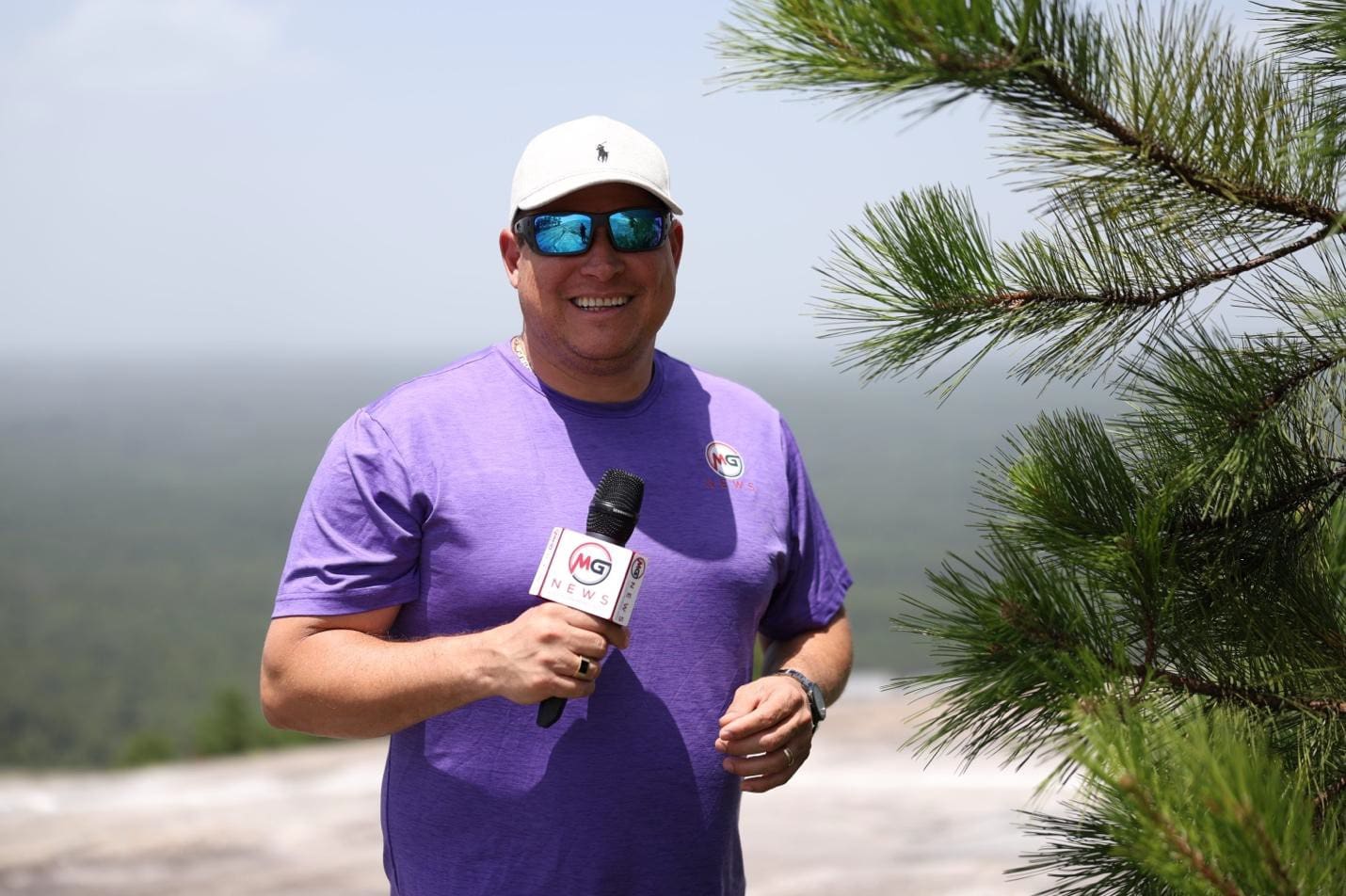
Mario Guevara is an Atlanta-based Salvadoran journalist who was detained by ICE while documenting a “No Kings” protest for his news company, MGNews, in June 2025.
Mario Guevara is just one of 42,755 people in the United States facing ICE detention without having a criminal record. The state with the fourth-highest number of detainees, Georgia had 3,022 people detained by ICE as of Sept. 15.
The Stewart Detention Center in Lumpkin, Georgia, alone had an average daily population of 1,921 as of the last report. Immigrants with little to no criminal history being deported is not a new issue in Georgia or elsewhere, but immigrant arrests have skyrocketed by nearly 40% in 2025 under the Trump Administration.
While deportations and detainments of immigrants in Georgia will ultimately affect the economy due to that population making up 15.3% of the working labor force and serving as an integral part of the state, the true, unadulterated impact of ICE raids is to the victims and the families of those who are facing these charges and are ultimately helpless against them.
Giovanni Diaz — a partner of Diaz and Gaeta Law, and the attorney who is representing Mario Guevara — said he feels powerless in the immigration court despite having what he called “a clear-cut case” to free his client Mario from on bond, despite having a long, successful career of helping his clients receive bond for deportation cases.
“We know the law is on our side, but the uniqueness of the immigration court system lends itself to that injustice, to the whim of the executive branch,” Diaz said.
While the Guevaras offer a recent high-profile example of how families are affected by this, ICE action in local communities, separating children from their parents, is not a new phenomenon. As of 2019, 17.8 million children had at least one foreign-born parent, and as many as 500,000 of those children witnessed deportation with at least one parent.
These statistics come from even before the current administration. With a surge in ICE presence due to a 300% increase in ICE spending, it is becoming disproportionately dangerous for immigrants in the United States to live amongst their communities in states like Georgia due to the fear of deportation and detainment, regardless of their legal records.
Scarlet Kim, a senior staff attorney at the ACLU Speech, Privacy and Technology Project said the action from the executive branch and the Department of Homeland Security is an assault on free speech that has detrimental effects on immigrants living in the United States.
“It has a huge chilling impact. I think a lot of non-citizens, even those here lawfully, especially those who are undocumented … will want to keep their heads down, not speak out about criticisms of the Trump Administration, particularly with respect to immigration enforcement,” Kim said.
There is an emotional factor that comes with losing a family member to ICE custody, too. Oscar Guevara said he struggled with the imbalance of his family and with trying to fill the role of his father’s departure from their daily lives.
“I have to be the man in the house [now],” Oscar Guevara said. “Dads are supposed to help guide their sons into this role, but I was forced into this role at once. It’s been four months since he stepped foot in [our] house. … I could never completely fill [his] role.”
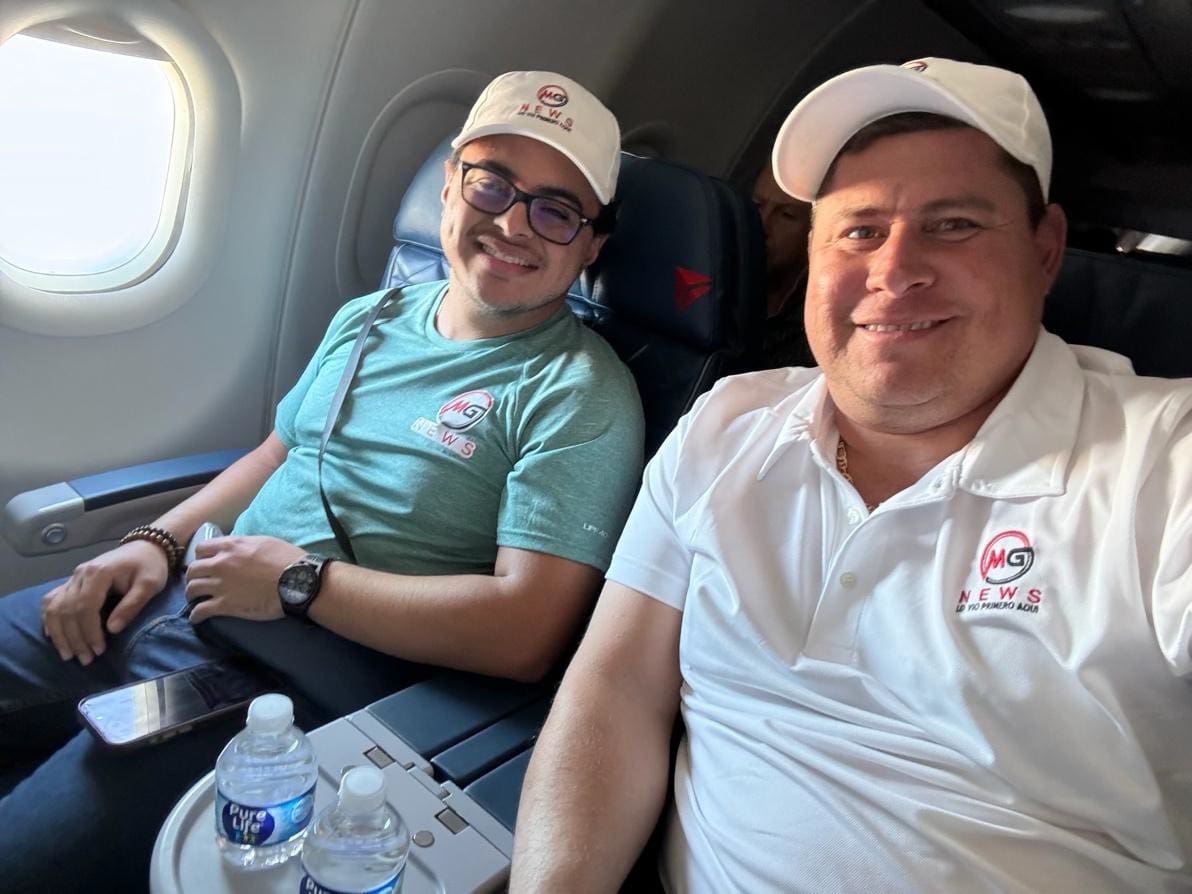
The strain of his father’s detainment is not only mental for Oscar Guevara, but also physical. He had to continuously pick up double, and sometimes even triple, the amount of work assignments for his job as a sports photographer to keep his family afloat after his father’s detainment to sustain their household. Struggling with a condition that causes significant seizures around every two months, this extra work was straining on his body when combined with the stress of his father’s detainment.
“It’s just tough — mentally and physically. There have been several times at my assignments where I feel so stressed because of all of this, that I feel like I’ve almost had a seizure,” Guevara said.
Beth Foster Marone, a Fayetteville, Georgia resident, has a close family member named Luis Eduardo Rujana who was detained by ICE on his own doorstep this September.
“They [showed] up at the door, and he knew not to answer,” Marone said.
Marone said Rujana was in the process of getting American citizenship through his marriage with Inga Swett, Marone’s former daughter-in-law, when ICE showed up at his family home. Rujana followed all the rules of getting a green card — hiring a lawyer, going to court and being careful to avoid any situations that could put him on ICE’s radar. His wife and two children were not home at the time two officers showed up unannounced outside his front door, Marone said.
“He heard someone talking to Inga through the Ring camera, so he came down to see what was going on,” Marone said. “[He] opened the door and they said, ‘We need to talk to you.’”
According to Marone, Rujana told the two officers he needed to grab his American passport and his phone to prove he was a citizen through a visa and that he was seeking green card certification. They told him to come outside to show his documents.
“That was his mistake. As soon as he crossed the threshold, they grabbed him,” Marone said.
Marone said Rujana was at the Stewart Detention Center in Lumpkin for 3 1/2 weeks before he was released on bail, but until his release, his family was unsure if he would make it back home. His children faced the harsh reality that their father could be deported at any minute.
“We had to be honest with them,” Marone said. “There was an absolute chance he could be deported … and we had to be honest [to the kids] about that.”
The lives of immigrants living in the state of Georgia and the United States are filled with uncertainty due to the presence of ICE right now. Civilians such as journalist Mario Guevara and husband and father Luis Rujana are just two people among the thousands being detained and held in detention centers by ICE in Georgia.
Regardless of criminal records, there is a target being placed on the back of any person who speaks out or opposes ICE, Kim said. In addition to those who oppose ICE, Diaz said the action could be taken against anyone, left to the discretion of ICE officers themselves.
“The attack isn’t on criminals. The attack is on anybody they feel shouldn’t be here,” Diaz said.
Local families like the Guevaras and the Swett-Rujanas feel the effects of increased ICE presence every single day. Rujana’s children are fearful that their father can be taken again at any moment.
“They are now scared that any time they don’t see somebody, they might be gone. It’s not healthy for kids to live in that state of anxiety … children shouldn’t have to worry like that,” Marone said.
After over 110 days in ICE custody at various detention centers in the state of Georgia, Mario Guevara was deported to El Salvador on the morning of Friday, Oct. 10. Full of emotion, Oscar Guevara caught the first flight to El Salvador to see his father free from custody and in civilian clothing for the first time since June 14.
While the Guevara family was full of relief that Mario was freed from his legal confinement in the United States, Mario’s deportation began a new era for their family — one in which they would be separated by an ocean and nearly 1,500 miles. Oscar said the biggest effect of this has been the emotional impact on his family. He said not having his father’s calming presence around has been the most difficult reality to cope with.
Mario Guevara is steadfast in his efforts to continue his life’s work to be a journalist, despite being punished for it. He told Oscar he is aiming to build up MG News in El Salvador and get sponsors to aid in his effort to establish his news company internationally. Despite the challenges he will ultimately face with starting up a business in a third-world country, Oscar said Mario is moving forward and continuing to live his life, even while adjusting to the new reality created by ICE’s separation of his family and disruption of his work.
“This isn’t over,” Diaz said. “If the system still works the way it’s supposed to work, there is going to be life after this administration. So, I think getting Mario back is a reality, and I think there’s still a high probability of it.”
Kim said she wants the community to rally together and continue to speak up against the governmental injustices affecting free speech. She urges those with secure legal status to document community events to shed light on cases such as Mario’s that may not be receiving the same coverage, as it could have a noticeable impact on the outcome.
“At the grassroots level, I think that it’s really important especially for people who have a secure immigration status to continue documenting what’s happening. Just lifting up their phone and documenting it can have an enormous impact, because it can sometimes have a deterrent effect against an abuse that might occur,” Kim said.
Despite the ongoing fight of the Guevaras and all the other families faced with the harsh action of ICE in Georgia, life does not slow down for the missing pieces of their lives. Oscar said he must continue looking forward and living his life without his father by his side.
“I just have this feeling of resignation,” Oscar Guevara said. “Life keeps going and I have to live my life, unfortunately, without him [here]. There’s nothing I can do. This is [how] it is.”

Sofia Cupertino is a third-year journalism student at Kennesaw State University with future goals of becoming a professional freelance photographer. Achieving her academic goals through feature writing, she uses her journalism experience gained in university towards her future career aspirations.